

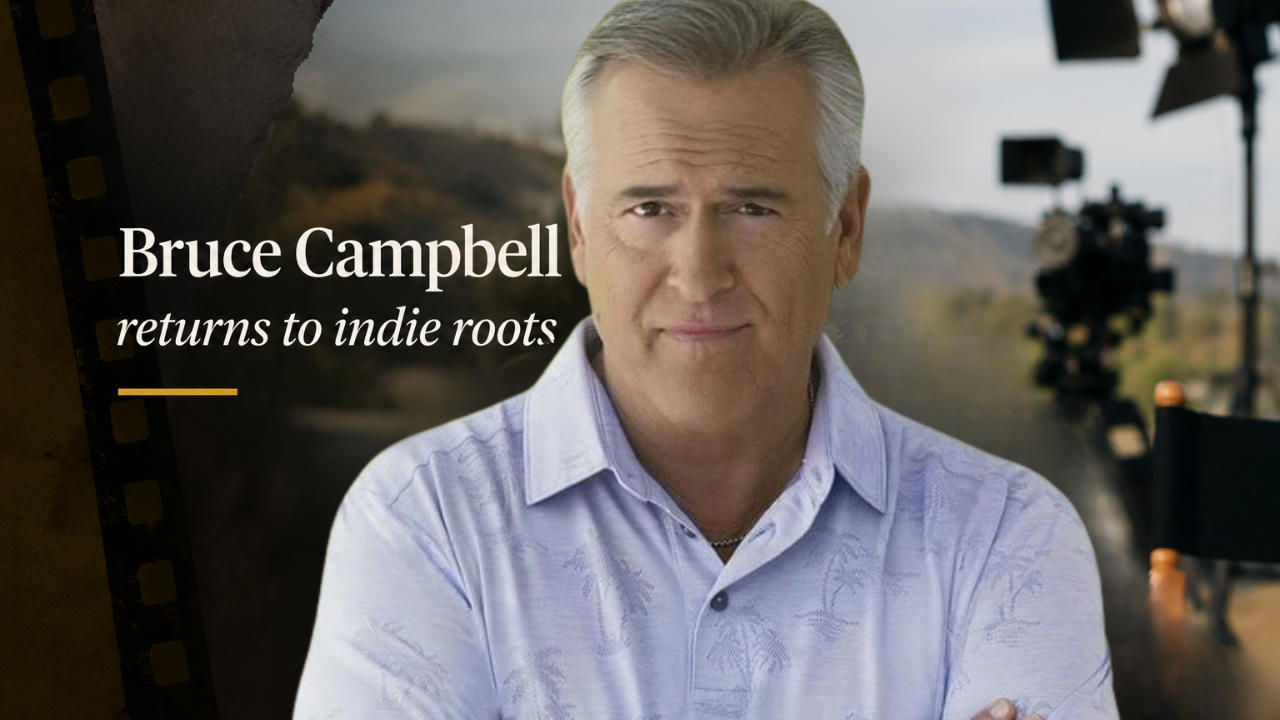
Bruce Campbell is returning to independent filmmaking with Ernie & Emma, while the Paramount-Warner Bros. Discovery merger and Fakenham Film Festival bring fresh attention to the future of indie cinema.
Bruce Campbell Returns to Independent Filmmaking
Bruce Campbell is returning to the kind of independent filmmaking that helped launch his career with Ernie & Emma, a personal drama he wrote, directed, produced, and stars in alongside his wife, filmmaker Ida Gearon.
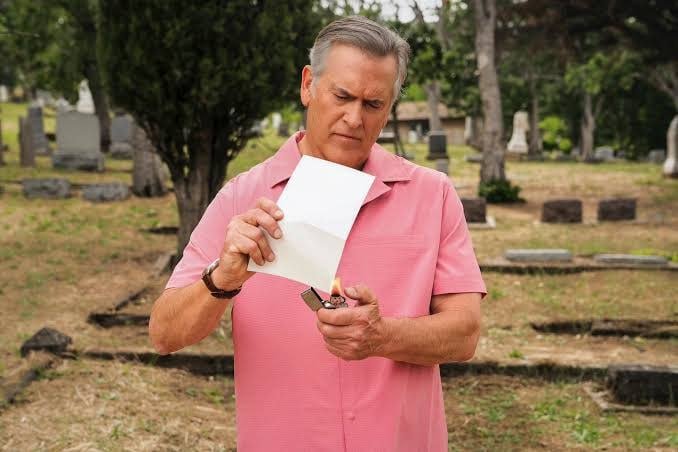
The film follows Ernie Tyler, a small-town pear salesman whose late wife leaves behind a list of instructions guiding him on where to scatter her ashes, sending him on a reflective journey through Oregon.
For Campbell, the project represents a deliberate return to working outside the traditional studio system. He has spoken about how an early studio experience, in which he was removed from a lead role and saw the resulting film re-edited and ultimately unreleased, shaped his view of studio filmmaking.
With Ernie & Emma, Campbell and Gearon independently produced the movie, giving them greater control over the story and production.
The film is being taken directly to audiences through an 18-city Alamo Drafthouse tour, with Campbell appearing at screenings and participating in live Q&As. The tour began September 4 and is scheduled to continue through November 14.
Paramount-WBD Merger Raises Questions for Indie Films
The $111 billion Paramount-Warner Bros. Discovery merger could create limited opportunities for independent filmmakers, but executives in the sector remain cautious about its promises, according to a report by Screen Daily. Under commitments made as part of the antitrust settlement, the combined company will be required to theatrically release at least four independent films each year.
The company will also establish and run an independent acquisition fund within 30 days of the transaction closing, contributing at least $5 million annually for five years. The merger agreement includes a broader theatrical quota of 30 releases a year during the first two years, rising to 32 in years three through five.
For some in the independent sector, those commitments are a useful starting point. Jackie Brenneman, president and CEO of the Independent Film & Television Alliance, described them as “a good start” and called for a formal partnership to help ensure they are delivered.
Others regard the fund as too small to make a meaningful difference. Producers pointed to recent TIFF acquisitions, including Focus Features’ approximately $15 million deal for Obsession and the more than $10 million acquisition of River by Universal and Blumhouse Atomic Monster, as evidence that the fund could have limited impact.
The sector is also seeking clarity over who will run the fund, what qualifies as an independent film and how many outside projects the combined company will actually acquire.
The merger could potentially give independent filmmakers another buyer and exhibitors more theatrical inventory. But its commitments are largely behavioural remedies lasting five years, leaving the sector uncertain about what will happen after that period ends.
Fakenham Festival Brings Independent Films to the Big Screen
The Fakenham Film Festival is returning to Norfolk from October 2 to 4, bringing independent films, local filmmaking and stories connected to the county to Central Cinema Fakenham.
Organised by Active Fakenham, the festival aims to give independent filmmakers, particularly those with Norfolk connections, the chance to see their work shown on the big screen.
This year’s programme includes short films from independent filmmakers across drama, comedy, documentary, science fiction, horror, and films made by young people.
The festival has received around 30 independent-film submissions, while nine films have been selected for the FFF26 competition.
The event also includes feature films with Norfolk connections, family screenings and a Dark, Edgy and Horror Showcase. Its short-film programme focuses on local stories, people, places and ideas, linking independent filmmaking to the community where the festival takes place.
The festival will conclude with a Sunday red-carpet event featuring competition screenings, awards, live music, refreshments and opportunities for filmmakers and audiences to meet.
