
Are you a filmmaker who overthinks every next step before taking the first one? Maybe you are in the middle of making a passion project, and the question of who besides you would actually sit down to watch it has finally started to sink in. Or worse, you have just finished your film and realised that the only guaranteed viewers are a handful of friends and family who would rather watch it for free.
Whatever stage you are at, the challenge is the same: getting people to choose your film over a blockbuster rewatch or whichever acclaimed indie is currently dominating the conversation. The problem is that your marketing budget is either half the size of your already modest production budget, or it does not exist at all.
Here is the good news that the pressure may have made you forget: audiences have never been more accessible than they are right now.
Getting people to watch a film starts with curiosity and genuine interest, and both can be built through creativity rather than expensive, well-worn industry playbooks. The same creative instinct that helped you make your film can now help you get it seen.
Before getting into the ideas, one lesson from Abraham Lopez, CEO and Founder of A Greek God Entertainment LLC, a company behind more than 1,000 award-winning productions, frames everything that follows. “I’ve learned that making a great film is only half the battle. If people don’t know your movie exists, they can’t watch it or support it. Marketing isn’t just about selling a film; it’s about building genuine relationships with your audience and letting them be part of the journey from the very beginning.”
That same grit and ingenuity that carried your production through every obstacle can carry your promotion, too. The ideas below are designed to put that creativity to work, whether you are still making your film, preparing for release, or trying to keep it in front of audiences after it is out.
Brace yourself, because these ideas, and the ones they may spark in you, will put your film to the test.
1. Promote the Film’s Theme, Not Just Its Title
One tangible way to promote a film’s theme is through anonymous confessional sticky notes.
Write emotionally raw, anonymous messages that match your film’s themes. Place them in public spaces where people pause between one thing and the next, like public bathrooms, coffee shops, bookstores, or bus stops.
The notes can read like vulnerable secrets, a panicked warning one character might leave for another in a supernatural thriller, or a blunt intrusive thought. Include a small QR code at the bottom that leads to your trailer and redirects to your website or social media.
The mechanic behind how this works is simple. A passerby stops, reads something that hits close to home, and scans out of curiosity.
If someone connects with a sticky note enough to scan it, you can be reasonably confident they belong to what we describe as your Tier 1 audience. [Read our article where we explained the audience tier list and how it informs your promotional approach.] These are the viewers most likely to stay engaged until release day and to generate real word-of-mouth, which is far more durable than a social media post.
2. Pitch your Film to Local Press as a Homegrown Story
If your film was shot in a specific town or location, find the local news station, independent media figure, a local podcaster or blogger residents already know and trust. Pitch them the story of a filmmaker making something in their community, building it around local pride.
The value of this move is in what comes after. When your film is close to release, reshare that coverage with the audience you have built.
Through this, the original outlet could benefit from the reach you send back to them. Their audience would be exposed to your film through a source they already trust, and you gain a new group of prospective viewers who are arriving with built-in context.
3. Document Pre-Production Milestones
Share the early journey of building your film and let your audience feel like they are receiving exclusive insider access.
Facebook and Reddit are some of the best platforms for this. Find communities connected to your film’s central theme or its most distinctive cultural element.
Post about the personal source behind your film’s theme, the choices that shaped the casting, and the logic behind specific locations. If you are still in production, let the community feel like they are going through it with you. If you have already wrapped, frame it as a behind-the-scenes journey being shared retrospectively.
Doing this creates a connection with communities built around a specific idea that lives inside your film by drawing on things that appear in your promotional materials.
4. Turn Behind-the-Scenes Problems Into Content
Show the reality of indie filmmaking. When a location floods, equipment breaks, or a shoot goes sideways, document it as raw B-roll, crew interviews, or on-set photos.
Do not present it as a hardship story. Make it into an unfiltered, high-stakes production diary, or even as self-deprecating content that people find genuinely funny. Film these moments and edit them with dramatic sound or music and witty captions.
Showing your film shoot as it was imperfectly done humanises the production. Audiences root for filmmakers they find genuinely relatable. Upon the film’s release, they are encouraged to watch it with a personal investment in seeing what came out of those exact disasters.
5. Use Cast and Crew to Expand Reach
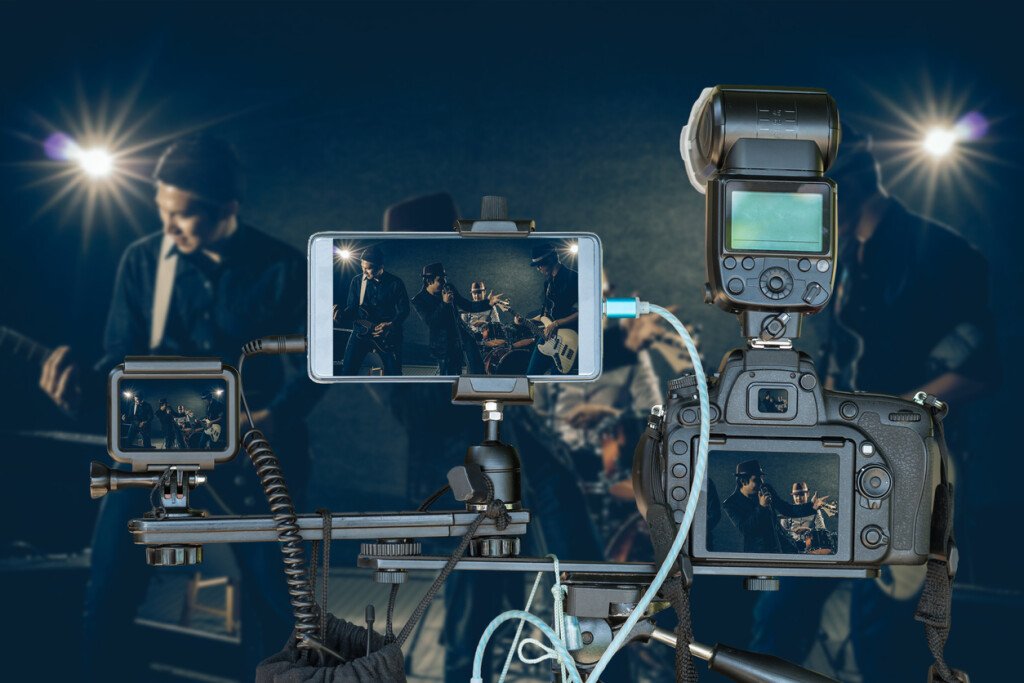
Encouraging your cast and crew to share updates and take interviews about the production is still a solid option. However, there is another way to use your actors. Turn their performances into reaction GIFs.
Find a scene where a character reacts with exaggerated shock or comical fear. Cut it tightly and upload it to GIPHY with your film’s title tagged natively. Caption it with something universally relatable, like “When you splash cold water on a cat.”
GIFs are used globally across social media comments and messaging apps, and because the GIF is tagged with your film’s title, a percentage of curious users will click through to find out about it.
6. Host a Live-Stream Set Tour With Hidden Clues
Turn a standard set tour into a gamified live experience. While showing your cast in costume, makeup, and set design, hide objects or visual clues around the set that hint at the plot. Let viewers try to find and identify them in real time.
All you need is TikTok Live or YouTube Live, a smartphone gimbal, and a few deliberately placed set details. The result is that viewers feel like insiders who helped uncover something real, giving them a stronger feeling than passively watching a trailer.
Casual live-stream viewers who stumble on it can become committed, first-weekend ticket buyers.
7. Partner With Communities Connected to the Film
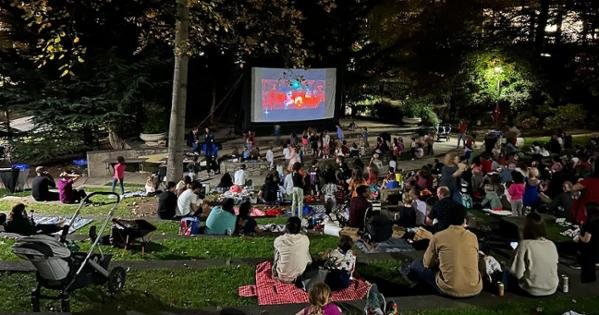
If your story touches on something like recovery from addiction, reach out to a sobriety community and offer them an exclusive private online screening.
Encourage the community’s members to bring someone with no personal connection to that community.
The people directly connected to the theme can speak about the film’s portrayal with real authority. They can generate credible, personal reviews and word of mouth, while the people they bring can then carry the film into their own networks.
8. Contact Niche Publications, Podcasts, and YouTube Channels
When pitching to niche creators, resist the urge to pitch your film as a whole. Pitch the one specific detail from your production that fits precisely what they already cover, and build a content idea around it that genuinely serves their audience.
Instead of limiting your pitches to film blogs, reach out to an interior design podcast. As an example, you can tell them how you deliberately designed a set’s colour palette to mirror the psychological stages of low self-esteem.
Suggest content ideas to them, encouraging them to use clips from your film as reference material. You are creating something useful for them while earning coverage and interest in front of an audience that would likely never encounter a conventional indie film review.
9. Work With Micro-Influencers
Find online personalities that have a following between 5,000 and 20,000. Ensure their audience overlaps with your film’s niche, and offer them early viewing access in exchange for organic coverage.
One approach worth trying is sending an unannounced physical package. Include a handwritten letter written from the perspective of one of your characters. Add something surprising and uniquely tied to the film, a flash drive with the trailer or an invitation to a private screening.
The mystery of the package gives the creator a reason to document the unboxing, but just in case, you can add a Post-it that subtly urges them to. While they get high-retention content for their followers, you get an authentic promotion that does not look or feel like advertising.
10. Enter Targeted Film Festivals and Press Coverage via Fee Waivers
Film festivals typically require submission fees, but the industry access they provide- investors, distributors, and press — who are often only reachable in that context, makes them genuinely worth pursuing even on a zero budget.
Submit through platforms like FilmFreeway and follow up by directly and courteously emailing festival programmers to request a fee waiver based on your production’s budget. In addition, frame your film clearly as a strong thematic or cultural fit for their specific audience.
P.J. Starks, writer, director, and producer of New Fears Eve (2025) at Blood Moon Pictures, points to proactive, professional outreach as a consistent part of outreach like this.
“Communication is key, and cold emailing has been a lifeline to establishing promotion and building relationships with the press. More importantly, always follow up…I’ve found that most press and media aren’t out for money; they genuinely want to spread the word about your production. Especially if you have an infectious enthusiasm.”
Researching individual festival mandates and writing personalised letters rather than mass-emailing is time-intensive. However, the payoff is real: a zero-cost festival and press validation that earns you a credential for your poster and opens doors that cold social media reach cannot.
11. Create Different Trailers for Different Audiences
Re-cut your existing footage to target audiences who might not watch your film as it is typically framed.
If your film is primarily a horror, cut one trailer that foregrounds the romance, another that emphasises the suspense, and a third built around the comedy. Each of these speaks to a different viewer. As you do this, make sure each version still reflects the film’s core identity.
12. Release One Strong, Unresolved Scene
Pick a single, continuous sequence that showcases your film’s acting quality and writing, and cut it at the absolute peak of its tension. Release it publicly and invite the audience to guess what happens next.
Offer a free ticket or a piece of merch to someone who guesses correctly, or simply encourage discussion by asking people to connect what they see with anything already visible in your trailer or teasers.
Engagement from the comment section should drive the clip into recommendation algorithms, acquiring more prospective audience.
13. Record Audience Reactions and Repurpose Them
Use the private community screening mentioned earlier and film your audience watching. Then cut their raw, live facial expressions and add them to your production revelations.

If your film is horror and it genuinely frightens people, compile a sequence of viewers’ reactions. Follow it with a behind-the-scenes clip showing exactly how you achieved that effect on a minimal budget. Invite cinephiles to ask questions about the creative decisions behind it.
For new audiences, seeing undeniable proof that real people had real reactions to your work is social proof that no polished promotional campaign can manufacture.
14. Set Up Cross-Promotions With Other Indie Filmmakers
Find another indie filmmaker releasing around the same time and swap shoutouts.
To make it feel natural rather than promotional, create a small piece of digital content. An example could be one where characters from both films share a universe, or one film’s character references an element from the other.
If getting the actors together is not feasible, find a way to do it through the promotional materials themselves. By doing this, both films reach each other’s existing audiences at no cost to either side.
15. Continue Promoting the Film After Release
As actor and producer Suzann Toni Petrongolo, known for her work on the horror film Herman (2025) and The Dirty South, shared her long-term mindset towards indie film promotion.
“I also focus heavily on continued promotion after the film’s release, as I have found many independent films continue to grow over time as wider audiences discover it.”
One low-cost way to keep the film in circulation is through your phone’s mobile hotspot. Change the network name to something that directly references your film, such as Watch_(Film title)_Free or (Film title)Movie_DOT_com. Turn it on in busy coffee shops, libraries, or bookstores. People are always scanning for available networks, and when they do, they’ll see your film’s name without you spending anything.
That said, none of these methods replace the fundamentals which Petrongolo emphasized:
“I try to focus on what audiences will typically see first when they look up the film, such as reviews for Rotten Tomatoes and social media, as well as engaging interviews or podcasts.” Creative promotion works best when it sits on top of a solid conventional foundation.
The final word belongs to Andrew De Burgh, director, producer, and founder of Sacred Ember Films, known for Demoness (2025). He said to find what works and do it consistently, keeping your film in front of the audience wherever you are showing up.
“For me, podcasts have worked well for me, and sharing reels on Instagram. There will be days when your posts aren’t as effective, but the key is to keep trying different things. Be creative and have fun with it.”
At worst, a method that does not connect still puts your film in front of at least one person. That person tells someone. That someone tells someone else. Information about your film is now out there, waiting for someone to find it. At best, you find your audience, and they become the most effective marketing you could ever have.
