

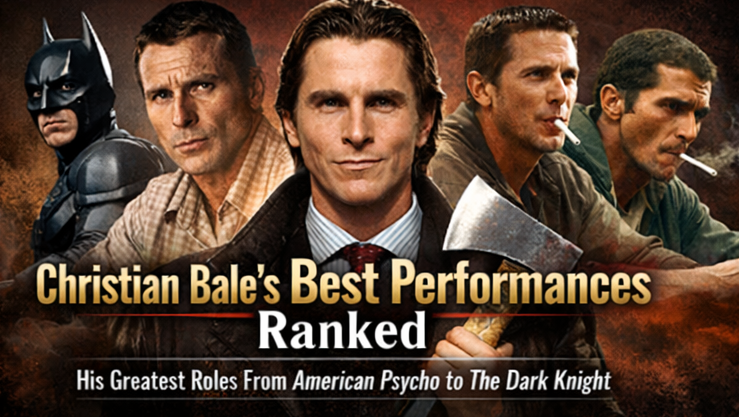
Christian Bale has built one of the most unpredictable careers in modern cinema. Over the years, he has played killers, soldiers, superheroes, addicts, outcasts, and men barely holding themselves together. Some actors become stars by repeating a persona. Bale did the opposite. He made reinvention the whole point.
What separates him from most of his peers is not just commitment, though that is certainly part of the legend. It is precision. Bale does not simply transform physically. He changes rhythm, posture, speech, tension, and even the emotional temperature of a scene. He can go huge, restrained, terrifying, funny, or painfully human, often within the same performance.
Ranking Christian Bale’s best work is difficult because his career is full of extremes. Some roles are famous because of their physical demands. Others hit harder because of how controlled they are. This list ranks the performances that best capture what makes Bale such a compelling actor: risk, specificity, and the feeling that absolutely nothing is phoned in.
Here are Christian Bale’s 10 best performances, ranked.
10. Empire of the Sun (1987)
Bale’s performance in Empire of the Sun is remarkable not just because he was so young, but because so many of the instincts that would later define his career are already visible here.
He plays Jim, a privileged British boy thrown into the chaos of war and internment. It would have been easy to overplay the role, especially in a story this emotionally loaded, but Bale does something far more impressive. He observes. He absorbs. He lets the world register on his face without pushing every feeling outward.
That quality of intense attention gives the performance unusual weight. Even as a child actor, Bale understands that stillness can be more powerful than dramatics. The performance feels intuitive, focused, and strangely mature, which is why it still stands out decades later.
It may not be his most iconic role, but it is the earliest glimpse of what made him special.
9. Shaft (2000)
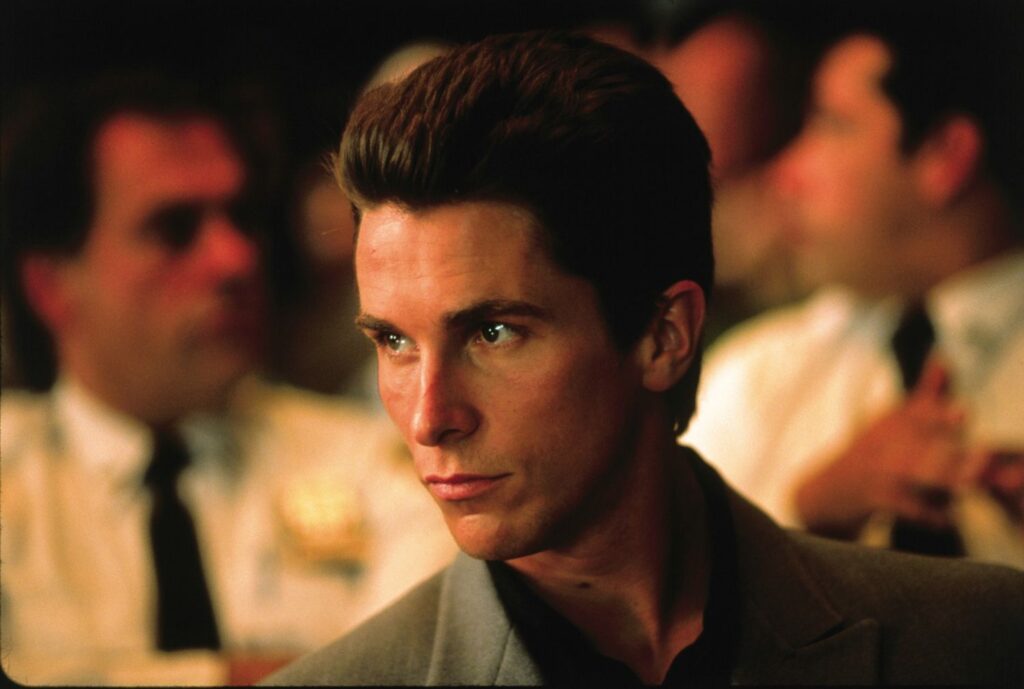
When people talk about Christian Bale’s best performances, Shaft is rarely one of the first titles mentioned. It probably should be discussed more.
Bale plays Walter Wade Jr., a wealthy and protected killer whose confidence comes from believing the system will never truly touch him. Instead of making the character explosive, Bale makes him smug, casual, and almost irritatingly relaxed. That restraint is what gives the performance its edge.
He understands that menace is often more effective when it feels effortless. Walter Wade Jr. does not need to dominate a room physically. He behaves like someone who has already decided the outcome. Bale leans into that entitlement and makes the character deeply unpleasant in a way that feels specific rather than theatrical.
It is not one of his flashiest roles, but it is an early sign of how exact his psychological choices already were.
8. Equilibrium (2002)
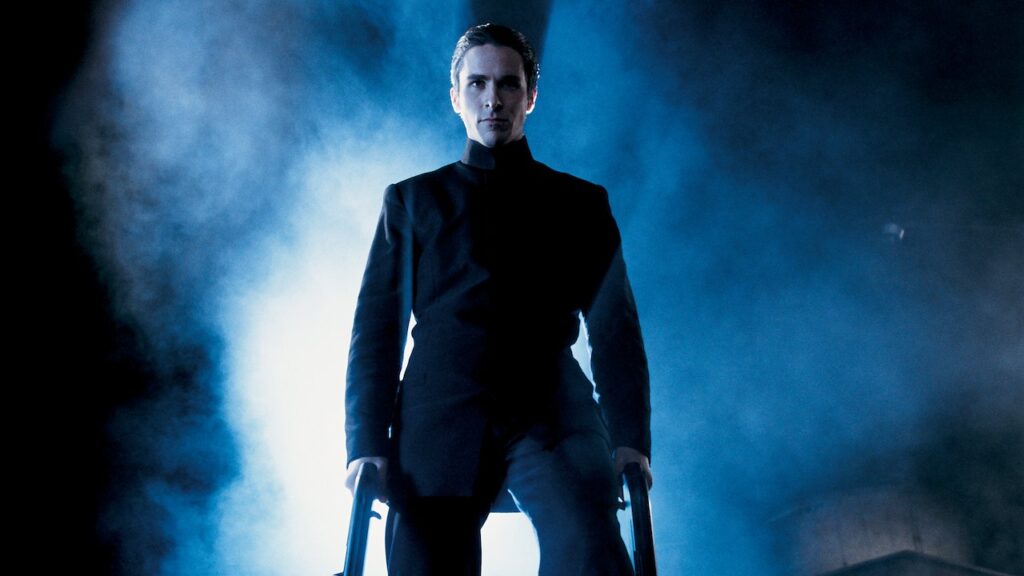
Equilibrium is one of the strangest films in Bale’s filmography, and also one of the easiest to undervalue. The film itself is highly stylized and often bizarre, but Bale commits to it with complete seriousness, which is exactly why it works as well as it does.
As John Preston, he plays a man living under a regime where emotion is outlawed. That concept could easily collapse into parody, yet Bale grounds it by making repression feel physical. His control is so severe that even the smallest flicker of feeling becomes dramatic.
What stands out most is the way Bale handles emotional awakening. He does not suddenly become expressive in a broad or sentimental sense. Instead, emotion arrives awkwardly, uncertainly, like something his body no longer knows how to process. That choice gives the performance a sincerity the movie desperately needs.
It is a fascinating early example of Bale playing a man whose identity is built on suppression.
7. The Machinist (2004)
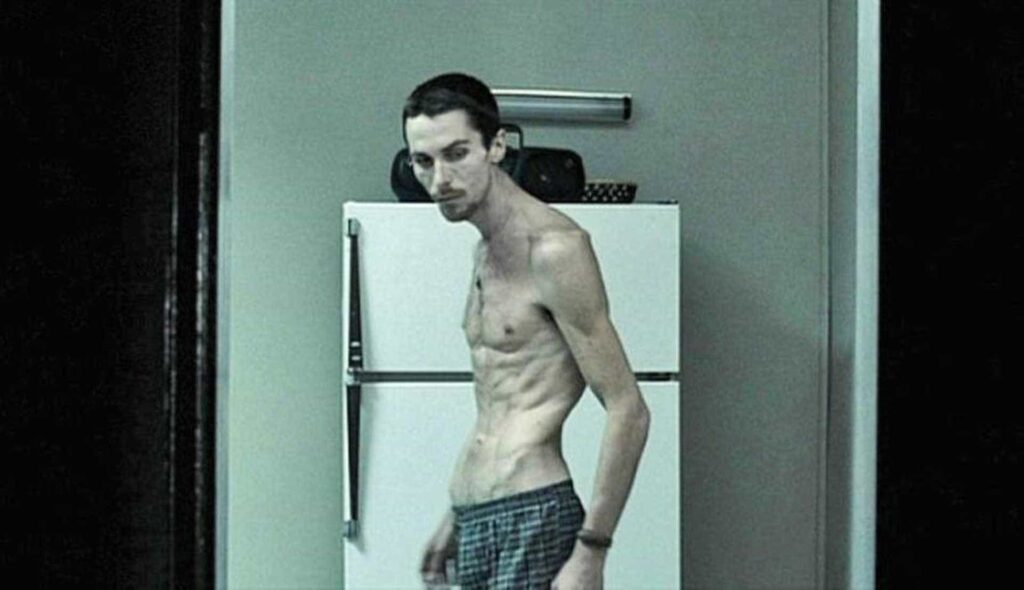
There is no way to discuss Christian Bale’s career without discussing The Machinist. This is the performance that permanently attached the word “commitment” to his public image.
Playing Trevor Reznik, Bale disappears into a body and mind that both seem near collapse. The physical transformation is shocking, but what makes the performance memorable is how intelligently he uses that condition. Trevor’s exhaustion shapes everything: the slowness of movement, the hollow focus in the eyes, the sense that even existing is difficult.
Bale never plays the role as a flashy breakdown. He does the opposite. He strips the performance back and lets absence carry the tension. That discipline is what keeps the film from becoming a stunt. The body tells one story, the silence tells another, and Bale balances both.
It remains one of the clearest examples of an actor using physical extremity in service of psychological precision.
6. Harsh Times (2005)
If The Machinist is Bale at his most hollowed out, Harsh Times is Bale at his most volatile.
He plays Jim Davis, a deeply unstable former soldier moving through Los Angeles like a man who has lost any stable sense of self. What makes the performance so effective is that Bale never cleans it up. Jim is messy, selfish, threatening, and often impossible to predict. That unpredictability becomes the performance’s greatest strength.
Bale’s vocal choices are especially striking here. He shifts tones, rhythms, and attitudes in a way that makes the character feel like someone constantly trying on different identities. The performance is twitchy without feeling random, and ugly without asking for sympathy.
It is not one of Bale’s most polished roles, but that roughness is exactly why it lands. Few performances in his career feel this dangerous from scene to scene.
5. Rescue Dawn (2006)
Werner Herzog’s Rescue Dawn gave Bale a role built almost entirely on endurance. As real-life pilot Dieter Dengler, he plays a man reduced by war, starvation, and captivity but never emotionally broken.
The performance is physically punishing, but unlike The Machinist, the suffering here is directed outward toward survival rather than inward toward decay. Bale understands that difference. He plays exhaustion without collapsing the character’s inner clarity. Even when Dieter is barely functioning, his determination remains sharp.
That is what makes the role so effective. Bale does not sentimentalize suffering, and he does not force heroism into obvious shapes. The performance is quiet, disciplined, and full of stubborn resolve. It feels honest in a way that many survival dramas never quite achieve.
This is Bale proving that disappearance into hardship can be powerful even when the work is almost entirely restrained.
4. The Dark Knight (2008)
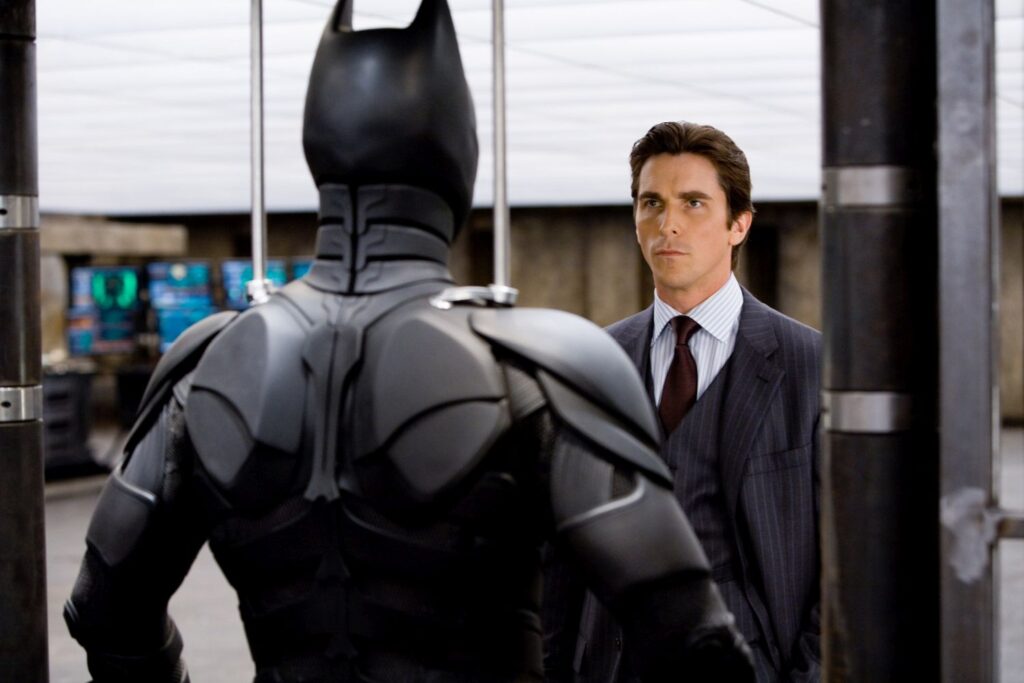
In a film dominated by enormous energy and chaos, Bale makes one of the smartest choices of his career in The Dark Knight: he pulls inward.
As Bruce Wayne and Batman, he understands that this is not a performance about commanding attention at every moment. It is about erosion. Batman is more tired here, more burdened, and less certain that control is even possible. Bale communicates that through stillness, vocal restraint, and a physical heaviness that makes the character feel worn down rather than triumphant.
The performance is often overshadowed in conversation because the film contains one of cinema’s most famous villain turns. But that actually makes Bale’s work more impressive. He understands how to anchor the story emotionally without competing for the loudest notes.
It is not his most transformative role in a physical sense. It is one of his most strategic and intelligent.
3. The Fighter (2010)
The Fighter contains one of Christian Bale’s most emotionally raw performances. As Dicky Eklund, he turns self-destruction into something intimate, embarrassing, funny, and painful all at once.
The brilliance of the performance lies in its looseness. Bale keeps Dicky in constant unstable motion, whether he is talking too much, smiling at the wrong time, or trying to sell a version of himself that nobody else fully believes anymore. You can feel him actively rewriting reality as he speaks.
What makes the role great is that Bale never mocks the character. He does not sand off Dicky’s damage, but he also does not reduce him to a collection of addiction clichés. There is empathy in the performance, but no softening. That balance is difficult to achieve.
It is one of the clearest examples of Bale dominating a film not through force, but through vulnerability and mess.
2. Ford v Ferrari (2019)

Ford v Ferrari is the performance that proves Christian Bale no longer needs extremity to disappear. As Ken Miles, he gives one of the warmest, most natural performances of his career, and it is every bit as impressive as the more physically punishing roles.
What stands out here is how effortless everything feels. Bale changes his rhythm, timing, and attitude so completely that the performance never announces itself as “serious acting.” It simply feels lived in. Ken Miles is funny, stubborn, brilliant, irritating, and deeply human, and Bale lets all of that coexist without overemphasizing any single trait.
There is a humility to the work that makes it especially strong. Bale is not asking the audience to admire the difficulty of the role. He is just inhabiting the character fully, with total confidence and control.
It is one of his most mature performances, and one of his most deceptively rich.
1. American Psycho (2000)
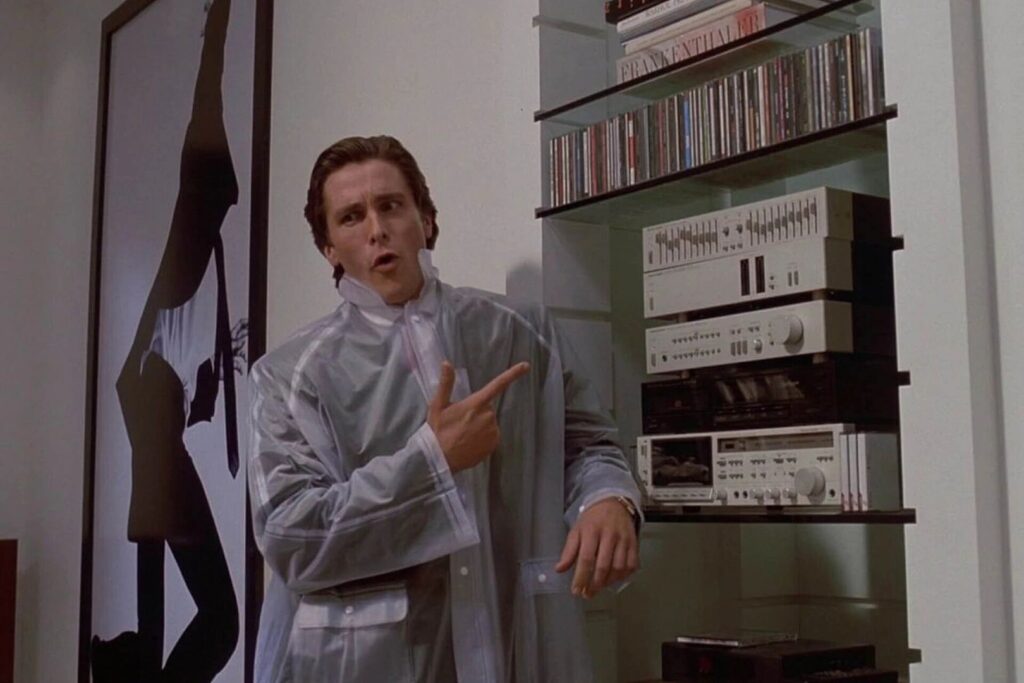
At number one is American Psycho, the performance that turned Christian Bale into something more than just a respected actor. It made him unforgettable.
As Patrick Bateman, Bale blends satire, horror, absurd comedy, and psychological emptiness into one of the sharpest performances of the modern era. The genius of the role is not just in the violence or the now-iconic line delivery. It is in how completely Bale understands the joke underneath the character.
Bateman is all surfaces: polished, controlled, performative, obsessed with status and image. Bale plays him with perfect composure, which makes every crack in the facade even more disturbing. He commits fully to the artificial smiles, the precise speech, the dead-eyed vanity, and the strange, almost corporate enthusiasm that makes Bateman feel both ridiculous and dangerous.
This is the role where Bale’s gifts all come together at once. The physical precision, the intelligence, the willingness to be ugly, and the ability to make control itself feel terrifying — it is all here.
If one performance captures what makes Christian Bale such a singular actor, this is the one.
Final Ranking: Christian Bale’s Best Performances
- American Psycho (2000)
- Ford v Ferrari (2019)
- The Fighter (2010)
- The Dark Knight (2008)
- Rescue Dawn (2006)
- Harsh Times (2005)
- The Machinist (2004)
- Equilibrium (2002)
- Shaft (2000)
- Empire of the Sun (1987)
Why Christian Bale’s Filmography Still Feels So Different
A lot of actors have impressive careers. Very few have careers this unpredictable.
Christian Bale has never built his reputation on comfort. He chooses roles that demand transformation, but more importantly, he chooses characters that resist simplification. They are often damaged, unstable, obsessive, morally compromised, or emotionally sealed off. Even when he plays heroes, he finds the strain underneath them.
That is why his best performances last. They do not feel optimized for awards clips or easy admiration. They feel risky. There is always a sense that Bale would rather make a role unsettling than safe, specific than broad, and memorable than likable.
That instinct is what keeps him in a category of his own.
