


Red is everywhere in horror. It’s splashed across posters, soaked into lighting, dripping down walls, and stitched into costumes. From buckets of blood to crimson dresses, red is the genre’s go-to color – a symbol that rarely whispers and almost always screams.
At first glance, red might seem like a no-brainer: it’s the color of blood, danger, violence. But it’s also the color of passion, desire, power, obsession, and even transformation. In horror, these themes are often intertwined – and red brings them all to the surface in vivid, visceral ways.
So instead of listing off every scary red hallway in cinema history, let’s go deeper – through concrete examples that show how red is used in horror not just for style, but for storytelling.
Blood and Violence
Carrie (1976 / 2013)
Let’s start with the obvious. In Carrie, red isn’t just color – it’s destiny. From the film’s infamous opening scene, where Carrie experiences her first period in a high school locker room, to the final, iconic blood-soaked prom moment, red marks the beginning and end of her transformation.
Here, red symbolizes both literal blood and the violence that comes with it – psychological, social, and supernatural. She’s shamed for bleeding, ridiculed by her classmates, and emotionally brutalized by her religiously fanatical mother. The red prom dress she never wears is replaced by a deluge of pig’s blood, and with it, her descent into full-blown rage. Red doesn’t just represent violence – it triggers it.
Hunger and Lust
Raw (2016)
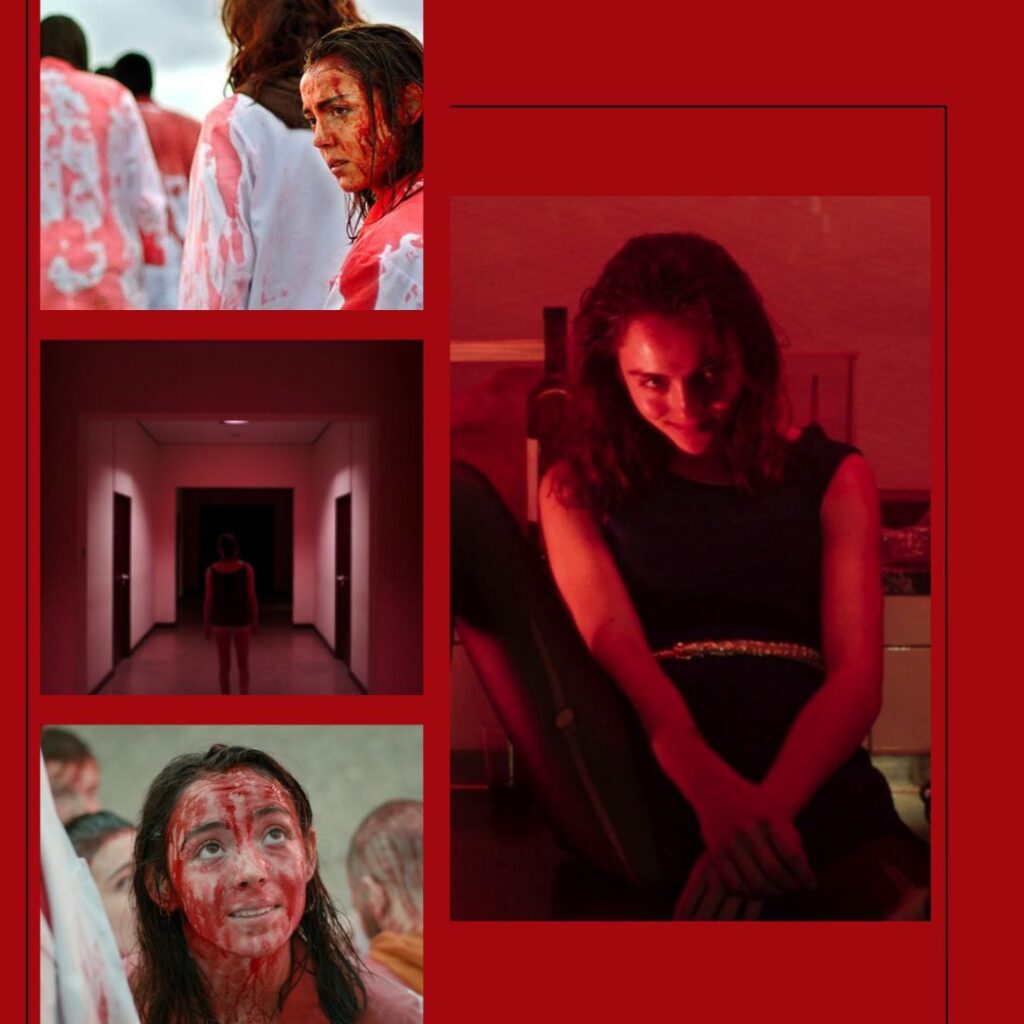
Julia Ducournau’s Raw might be the most deliciously disturbing film about color since Argento’s Suspiria. In Raw, red is tied directly to carnal hunger – both literal and metaphorical. As the protagonist discovers her taste for human flesh, her appetite grows alongside her awakening sexuality.
In one unforgettable scene, the entire party room is bathed in saturated red light. The camera lingers on her face, lit up like a predator eyeing its prey. Red becomes a reflection of both repressed craving and overwhelming desire – not just to consume, but to connect, dominate, and feel alive.
Danger and the Unknown
The Sixth Sense (1999) & The Village (2004)
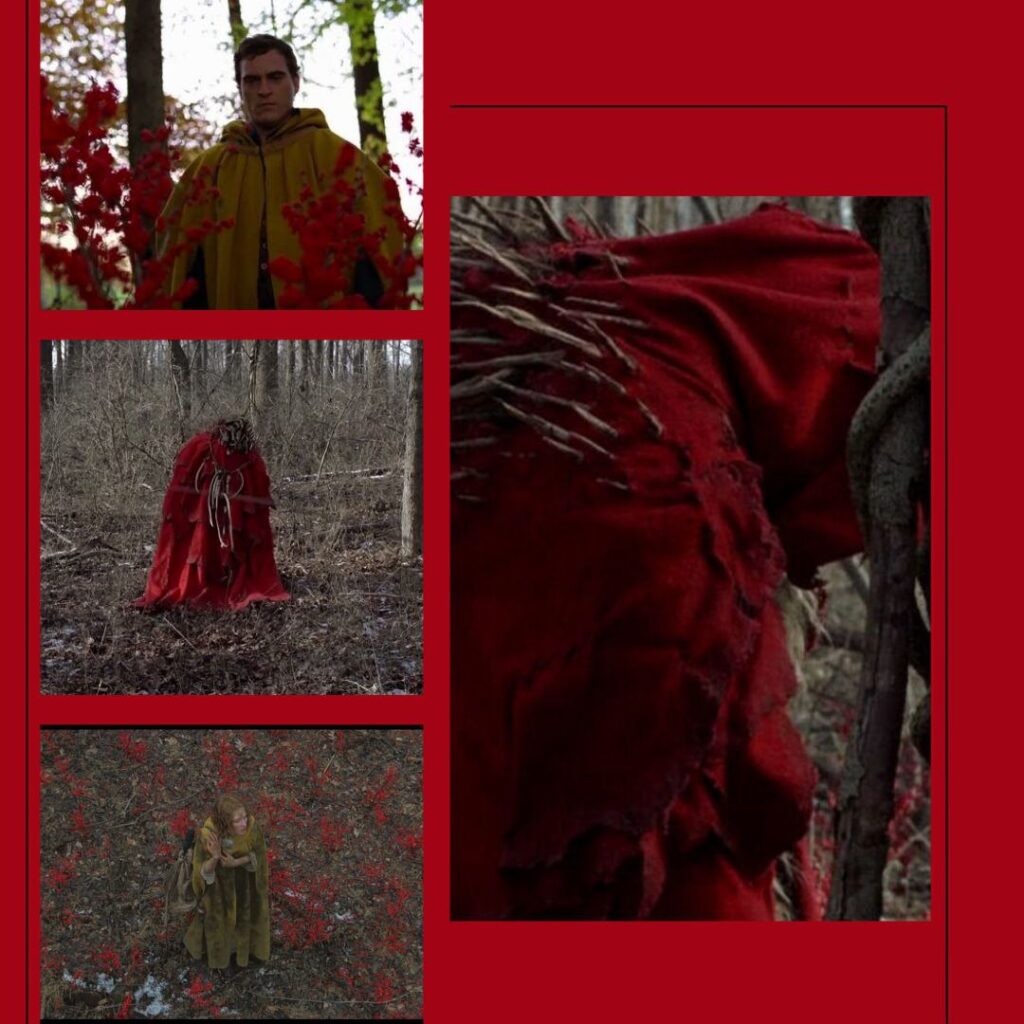
M. Night Shyamalan doesn’t just use red – he weaponizes it. In The Sixth Sense, red marks the presence of the supernatural. It appears at the threshold between life and death: a red doorknob, a red dress, a red balloon. It’s a warning – something unnatural is near.
In The Village, red is literally called “the bad color.” The townspeople refuse to wear it, convinced it attracts the monsters lurking in the woods. They hide behind yellow cloaks – the “safe” color – as if red itself is a curse. In both films, red isn’t just symbolic. It becomes a narrative trigger, a signal to the viewer: brace yourself.
Rage and Brutality
Mandy (2018)
If Mandy had a mood ring, it would be permanently stuck on red. Panos Cosmatos drowns the screen in a crimson hellscape as Nicolas Cage’s character embarks on a grief-fueled revenge mission.
Here, red represents pure, unfiltered rage. Not the kind that burns out quickly – but the kind that transforms. As the film gets weirder, bloodier, and more nightmarish, Cage’s world turns entirely red – as if the film itself is bleeding with him.
Passion, Obsession, and Self-Destruction
Black Swan (2010), Suspiria (2018), and Pearl (2022)
Red isn’t just about violence – it’s also about obsession. In Black Swan, Natalie Portman’s character descends into madness in her quest for perfection. Red punctuates her hallucinations, her injuries, her metamorphosis. It represents the moment her identity fractures – when passion becomes pathology.
In Luca Guadagnino’s Suspiria, red isn’t just about blood. It’s about power and transformation. Witches, dancing, menstruation, ritual – red here symbolizes female energy unchained. It’s seductive, mystical, painful – and vital.
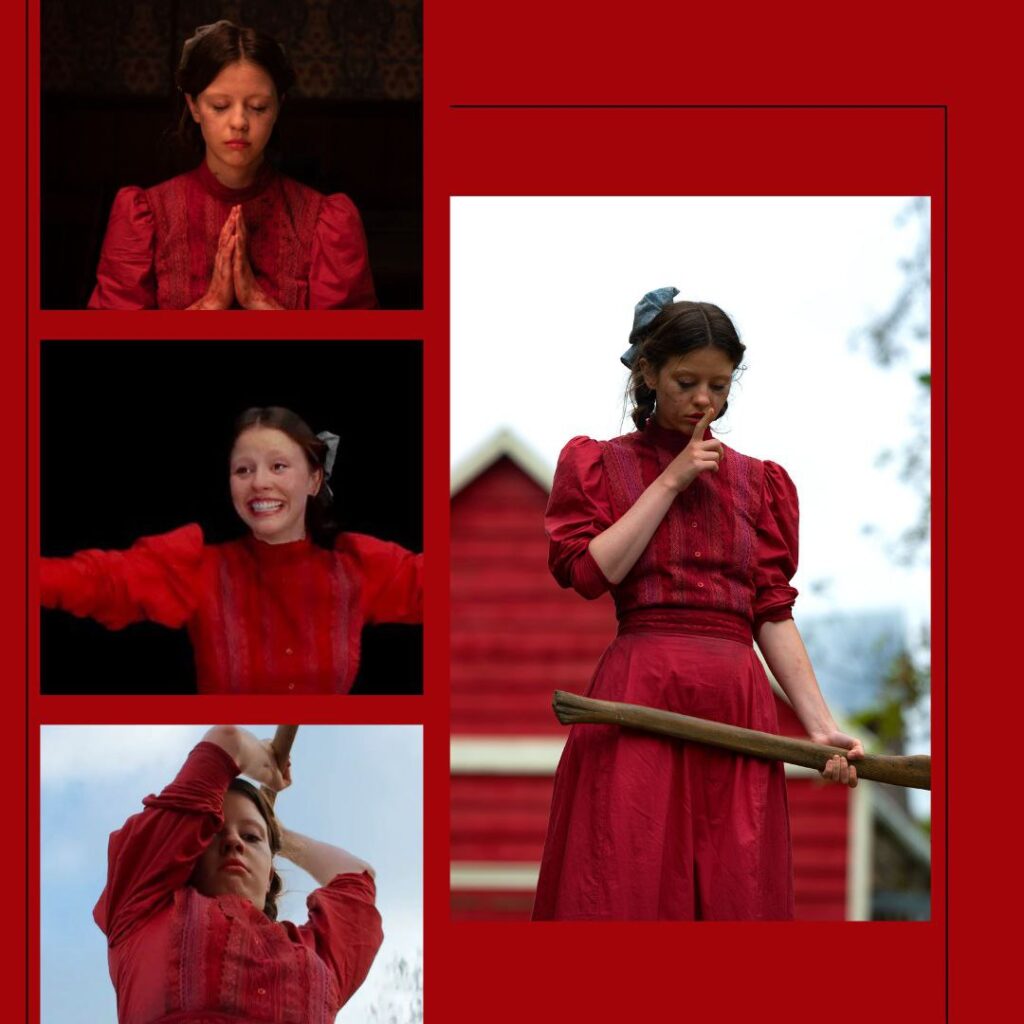
And then there’s Pearl. Her red dress is more than a costume – it’s a manifesto. Pearl wants to be a star, and she’s willing to kill to shine. Her passion burns hot and unrelenting, and red becomes the color of both her fantasy and her downfall.
Duality, Uniformity, and Protest
Us (2019)
In Jordan Peele’s Us, the red jumpsuits worn by the Tethered are instantly iconic. But they’re more than just costumes – they’re a symbol of blood, rebellion, and visibility.
The Tethered are the discarded, the forgotten – the literal shadow selves of privileged Americans. Their red uniforms turn them into an army, a unified symbol of rage and reclamation. Red makes them impossible to ignore – it screams for recognition. It demands that the audience confront what’s lurking beneath the surface – socially, politically, and personally.
Final Thought: Red Means More
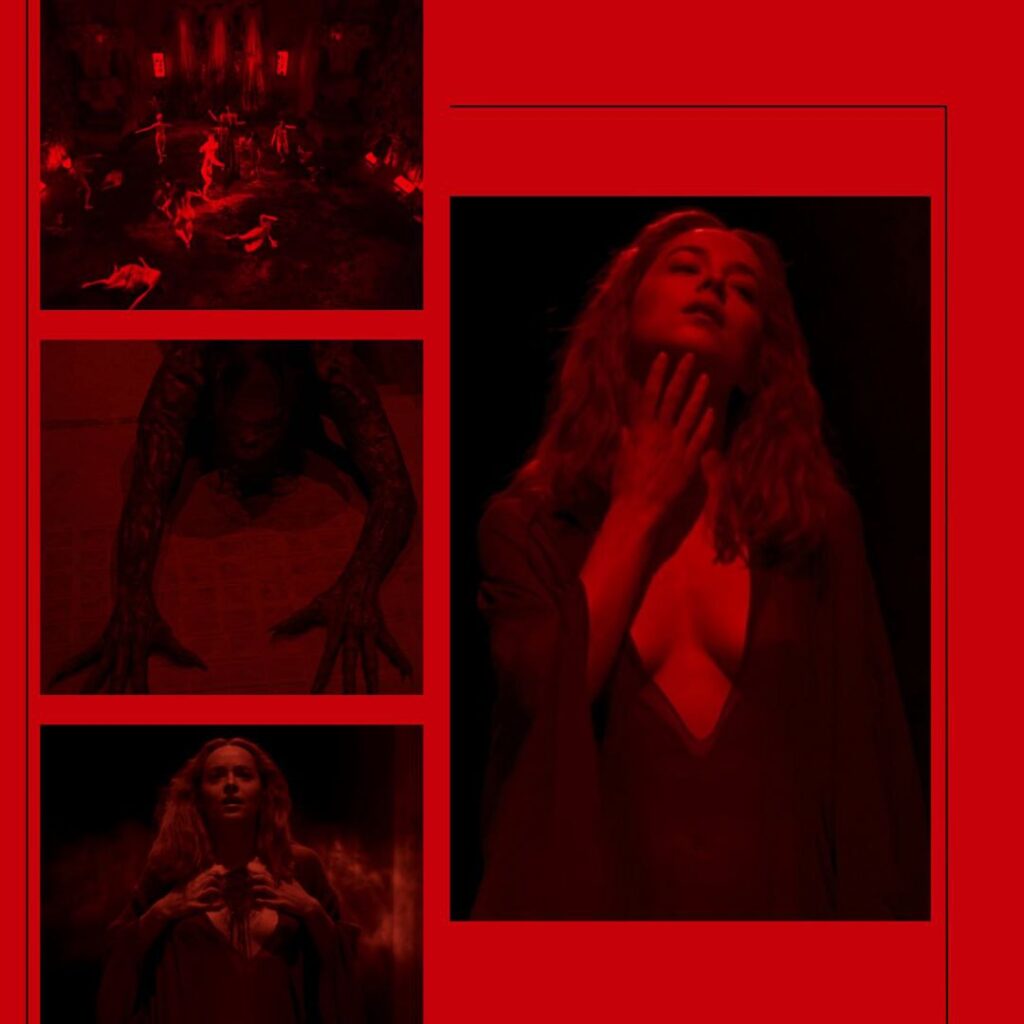
In horror, red rarely means just one thing. It’s as layered as the genre itself – visceral, symbolic, and emotionally charged. Red can mean danger, but it can also mean desire. It can mark a monster’s presence or signal a woman’s awakening. It can reflect chaos, transformation, revenge, hunger, grief – or all of them at once.
That’s why it works. Horror is a genre of extremes, and red is its perfect language.
So next time the screen lights up crimson – whether it’s blood on the wall, a dress in the spotlight, or just a flicker of warning – ask yourself: what does this red want from me?
Because in horror, color always has teeth.
